Liam Tobin Liam Tobin

UXO Global Briefing: What Was Found This Fortnight (and Why It Matters)

Within the last 14 days, the public record is dominated by a small cluster of high‑impact IED/UXO incidents: a failed nail‑bomb attack against a large public rally in Perth, and ongoing legacy‑UXO clearance operations in Lao communities.

Executive summary

  • In Perth’s central business district, a 31‑year‑old man allegedly threw a homemade nail bomb into a crowd of around 2,500 people at an Invasion Day rally; the device did not detonate, and no injuries were reported.gov+2[youtube]​

  • Specialist bomb technicians confirmed the item as a homemade improvised explosive device containing volatile chemicals, nails and metal ball bearings, and seized additional explosive‑related materials from the suspect’s home.miragenews+1

  • The incident is being investigated as a potential terrorist act, with charges including an unlawful act or omission with intent to harm and making or possessing explosives under suspicious circumstances.news.yahoo+3[youtube]​

  • In Champasak Province, Laos, clearance teams reported that a long‑running operation in Lak 48 village has destroyed 1,028 cluster munitions and four other UXO devices to date, with activity continuing into January 2026.laotiantimes+1

  • The same Laotian reporting highlighted the removal of three UXO items near homes in Kham district, showing how ERW remains embedded in residential environments and continues to shape land‑use, safety and development decisions.laos.redtac+1

Incident & discovery roundup (17–30 January 2026)

Location: Forrest Place, Perth CBD, Western Australia (26 January 2026).
What was found: Homemade improvised explosive device (“nail bomb”) thrown into a crowd at an Invasion Day rally.[youtube]​theguardian+3
Operational impact: Around 2,500 people were attending the rally when the device was thrown from a first‑floor walkway into an area used by families, older people and wheelchair users; police rapidly dispersed the crowd, isolated the device, and arrested a 31‑year‑old suspect whose bail was refused pending a court appearance the following day.theguardian+3[youtube]​
Observation: Large civic gatherings in ostensibly low‑threat environments still require credible IED contingency planning, with clear roles for stewards, public reporting and specialist bomb‑response capability to translate a near‑miss into a controlled, casualty‑free outcome.gov+3[youtube]​

Location: Forrest Place, Perth CBD, Western Australia – forensic follow‑up (26–27 January 2026).
What was found: Forensic confirmation of the device as a homemade IED containing unstable chemicals with nails and ball bearings as fragmentation, plus precursor chemicals and materials recovered from the suspect’s home.news.yahoo+2
Operational impact: Bomb Response Unit and forensic officers conducted detailed on‑scene examination, followed by a search of the suspect’s residence; the investigation elevated the incident to a potential terrorist act, attracting national media coverage and intensifying community concern, particularly among Indigenous participants at the rally.[youtube]​theguardian+3
Observation: Post‑incident forensic exploitation can substantially reframe an event—from disorder to alleged terrorism—changing the risk posture, the public narrative and the level of scrutiny applied to future rallies and public‑space management.theguardian+3[youtube]​

Location: Lak 48 village, Paksong district, Champasak Province, Laos (operation to date as at 28 January 2026; individual January demolition dates not reported).
What was found: Large numbers of legacy UXO, predominantly cluster munitions, cleared and destroyed over an extended operation that continues into January 2026.laotiantimes+1
Operational impact: Clearance teams have destroyed 1,028 cluster munitions and four other UXO devices in Lak 48, contributing to national targets for UXO removal but also illustrating the sheer scale of contamination and the effort required to render villages safe for agriculture, infrastructure and housing.laos.redtac+1
Observation: For land‑based projects, UXO clearance in heavily bombed regions is a medium‑ to long‑term enabling activity rather than a short pre‑construction task, with programme and funding implications that extend well beyond a single reporting period.laotiantimes+1

Location: Kham district, Xieng Khouang Province, Laos (early 2026; exact date not reported).
What was found: Three unexploded ordnance items discovered near residential houses and removed by clearance teams.laos.redtac+1
Operational impact: The report does not detail evacuations or cordons, but the proximity of UXO to homes signals persistent day‑to‑day risk for residents, particularly children, and reinforces the need for ongoing community reporting and clearance presence.laotiantimes+1
Observation: Residential‑proximity UXO finds should be treated by planners and lenders as evidence that “background” ERW risk remains active at the plot and village scale, not simply as a national‑level legacy statistic.laos.redtac+1

Sector lens – public gatherings, civic space and legacy‑affected land

The Forrest Place IED attempt crystallises explosive risk at the interface of public protest, civic‑space management and state security. A single individual with access to precursor chemicals and simple fragmentation materials was able to introduce a viable IED into a dense crowd in a central shopping district, with the near‑miss outcome owed largely to failure to function rather than benign intent. For projects that sponsor, host or border large gatherings—transport hubs, stadia, civic squares—this reinforces the need for realistic IED scenarios in risk registers and exercising, alongside more familiar public‑order planning.miragenews+3[youtube]​

In Laos, the Lak 48 operation and the Kham district removals sit at the opposite end of the spectrum: slow, methodical clearance of ERW that has lain in the ground for decades. Here, the primary sector lens is land release for agriculture, rural infrastructure and basic services, but the underlying lesson translates to major schemes: UXO in legacy‑affected regions is a structural, not incidental, constraint. Programmes that treat clearance as an optional or purely humanitarian add‑on are likely to encounter schedule compression, scope changes or unplanned pauses once ground is actually broken.laotiantimes+1

Sector takeaways

  • Event‑linked and station‑adjacent projects should assume that a single IED incident could trigger rapid dispersal of thousands of people, temporary loss of access to key concourses and intense media scrutiny for 24–48 hours.gov+3[youtube]​

  • In UXO‑affected rural settings, rail corridors, roads, power lines and community facilities may all depend on prior clearance of hundreds or thousands of items, with UXO timelines forming part of the critical path rather than a marginal activity.laos.redtac+1

Risk implications for major projects

Recent reporting from Perth underlines that high‑consequence explosive events in mature urban environments are not restricted to sophisticated devices or organised groups; low‑complexity IEDs can still threaten large gatherings and disrupt adjacent infrastructure. Programme risk models for city‑centre projects—particularly those with prominent public plazas, interchanges or protest‑prone locations—should explicitly include small‑IED scenarios, covering access control, rapid evacuation, business continuity and reputational impact.news.yahoo+3[youtube]​

In Laos, the scale of clearance in Lak 48 shows how UXO can dominate early‑stage risk for rural and peri‑urban development. For donors, lenders and sponsors, this has several implications: contingency allowances for survey and clearance need to reflect realistic item densities; contractual mechanisms should be clear on who owns the time and cost of dealing with UXO; and sequencing of works should avoid committing high‑value construction resources to areas where clearance is incomplete.laotiantimes+1

Across both contexts, common themes emerge for major projects and programmes: explosive risk is often low‑probability but very high‑consequence; it cuts across safety, schedule, cost and social licence; and it demands integrated governance rather than ad‑hoc incident response. Boards and steering groups that treat UXO/IED risk as “somebody else’s problem” are likely to encounter surprises; those that mainstream it alongside geotechnical, environmental and security risks are better positioned to manage it.[youtube]​theguardian+5

Advisory note – “Critical Friend Corner”

  • Tighten your time horizons: if your programme involves large public interfaces or work in UXO‑affected regions during 2026, treat the Perth IED attempt and current Lao clearance activity as contemporary reference points, not historical anomalies.theguardian+5[youtube]​

  • Stress‑test your plans: ask whether your emergency and welfare arrangements could cope with rapid dispersal of several thousand people from a civic space, or with the discovery of multiple UXO items in close proximity to homes or critical assets.miragenews+5[youtube]​

  • Challenge optimism bias around ERW: for land‑release and linear‑infrastructure schemes in legacy‑affected countries, ensure your schedules and cost plans can absorb prolonged clearance campaigns rather than assuming UXO risk will be minimal or quickly resolved.laos.redtac+1

  • Insist on integrated UXO and IED governance: bring explosive‑risk specialists into early design, stakeholder planning, security concept development and contract drafting, rather than only during procurement of an EOD contractor or in the aftermath of an incident.gov+5[youtube]​

Photo credit: Norwegian People's Aid team in Lao PDR

Read More
Liam Tobin Liam Tobin

Gaza’s Hidden Killers: Explosive Hazards and Threats in the Ceasefire Aftermath

Gaza faces a growing crisis of unexploded ordnance (UXO) and explosive remnants of war (ERW) following both recent and historic bombardments. These persistent hazards remain one of the greatest threats to life and recovery long after the last munitions have fallen.

Scale and Type of Contamination

Since October 2023, Gaza’s cities, agricultural areas, and infrastructure have been contaminated by a wide range of munitions: deep-buried aerial bombs (including MK 82, MK 83, and MK 84), mortars, rockets, all-caliber artillery shells, grenades, improvised explosive devices (IEDs), and cluster munitions—many of which are banned under international conventions due to their indiscriminate effects and longevity.

In accessible areas, more than 460 explosive items were located on the surface within the first months of clearance efforts. However, the majority remain hidden beneath rubble, collapsed buildings, or buried within infrastructure—posing ongoing, uncontrolled risk.

This danger is compounded by the degradation of Gaza’s local explosive ordnance disposal (EOD) capabilities and limited access to specialist equipment due to border restrictions. The combination of scale, complexity, and constrained response capacity places the population at continued risk.

Persistent Impact on Recovery and Aid

UXO and ERW pose a constant hazard to civilians and responders. As of early 2025, at least 92 casualties have been officially reported, though the real figure is likely much higher as displaced populations return to contaminated zones. The presence of explosive threats blocks the safe movement of aid convoys, emergency services, and construction teams—severely impeding recovery operations and humanitarian assistance.

Infrastructure restoration, medical relief, and resettlement efforts are all hindered by the need for systematic survey and clearance. Children, in particular, face heightened vulnerability due to limited awareness and exposure in informal play areas.

A Comparable Challenge to Global Conflict Zones

The explosive hazard facing Gaza mirrors challenges observed in other post-conflict environments. Ukraine, Syria, and Iraq each continue to manage extensive contamination long after hostilities ended. In Laos, contamination from cluster munitions still affects communities decades after conflict, underlining the long-term nature of these risks.

What sets Gaza apart is the combination of high urban density, constrained access to clearance resources, and protracted humanitarian conditions—making the safe return to normality even more complex.

UNMAS Warnings and the Scale Ahead

According to UNMAS, Gaza’s current level of explosive contamination is among the most severe in modern conflict. Dozens of new casualties are recorded monthly. Historical figures already show more than 8,700 ERW items removed from Gaza in previous post-conflict periods. With fighting intensifying in 2023–2024, the current contamination far exceeds previous levels.

Conclusion

The ceasefire may pause active conflict, but it does not end the danger. UXO and ERW continue to shape Gaza’s future by restricting movement, halting reconstruction, and threatening lives.

Coordinated international response, investment in clearance capacity, and adherence to proven risk mitigation frameworks are now essential to enable safe recovery. Without it, the human, economic, and environmental toll will continue to grow—long after the world's attention has moved on.

Read More
Liam Tobin Liam Tobin

🧠 Innovation in UXO Risk Management: Smarter, Safer, More Defensible

UXO clearance has long been rooted in military doctrine and manual processes—but today’s risks demand modern solutions.

Innovation in the UXO sector is no longer optional. It’s critical for:

  • Improving accuracy,

  • Reducing cost and risk,

  • And enabling stronger ALARP justifications.

Here’s how innovation is reshaping the field:

📡 1. Smarter Surveys with Advanced Geophysics

Multi-sensor arrays, drone-based magnetometry, and enhanced GPR now provide higher-resolution data across wider areas—faster and with less disruption.

At Sizewell C, we’ve seen the value of tailored intrusive survey techniques guided by layered geospatial intelligence—not guesswork.

🗺️ 2. GIS-Driven Risk Modelling

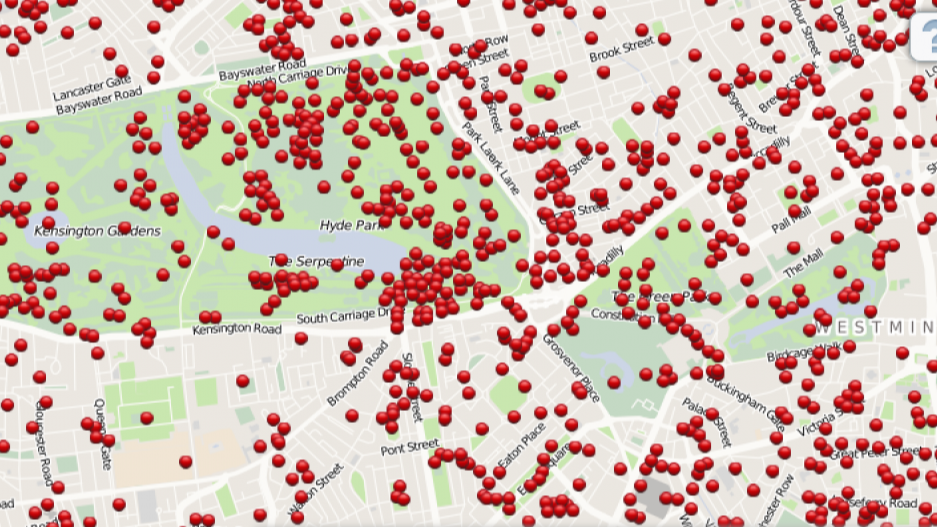
Historical bomb data is now visualised through powerful GIS platforms, allowing teams to:

  • Overlay bomb plots with current site designs,

  • Prioritise clearance zones,

  • And present ALARP arguments in spatial, intuitive formats.

🧑💻 3. Digital Assurance & Documentation

From RAMS review to live operational logs, assurance processes are now moving into secure digital ecosystems—creating traceable, transparent audit trails regulators can trust.

🎯 4. Simulation of Blast Effects

Engineering teams can now simulate potential UXO detonations to support:

  • Asset protection planning,

  • Emergency response strategies,

  • And exclusion zone design.

At Capreae, we integrate these innovations into our assurance frameworks—ensuring clients benefit from the best available tools without losing sight of legal obligations and real-world constraints.

Innovation doesn’t mean cutting corners. It means raising standards. And that’s exactly what the future of UXO risk management demands.

✅ That wraps this 7-part series. If you’ve found it helpful, please share, connect, or message—especially if you’re navigating UXO risk on a live project.

Read More
Liam Tobin Liam Tobin

🌍🌊 Land vs Maritime UXO Clearance: Same Threat, Different Worlds

UXO is a legacy threat both onshore and offshore—but how we manage it depends heavily on where it’s found.

Let’s explore the key differences between land-based and maritime UXO clearance in the UK:

🧭 1. Detection Methods

🔹 Land UXO Surveys Use walkover magnetometry, Ground Penetrating Radar (GPR), and probe-based intrusive methods (e.g., borehole magnetometry). Ideal for:

  • Urban redevelopment

  • Infrastructure foundations

  • Former MoD training grounds

🔹 Marine UXO Surveys Rely on multi-beam sonar, sub-bottom profilers, side-scan sonar, and magnetometry. Delivered via:

  • Towfish

  • ROVs (remotely operated vehicles)

  • Diver inspections in shallow or complex areas

⚙️ 2. Access and Clearance Tools

🔸 Land: Intrusive plant (e.g., piling rigs), hand excavation, mechanical diggers 🔸 Maritime: ROV-based clearance, diver-delivered disposal, or surface-level mitigation (e.g., avoidance or controlled detonation)

📋 3. Regulatory Landscape

  • Land: Guided by CIRIA C681, HSE expectations, and local authority planning.

  • Marine: Governed by CIRIA C785, MMO licensing, DEFRA, and marine spatial planning frameworks.

📊 4. Environmental and Safety Constraints

  • On land, constraints often involve proximity to utilities, buildings, or public roads.

  • Offshore, issues include marine wildlife protection, tidal/weather windows, and UXO mobility on the seabed.

At Capreae, we bring assurance across both domains—applying context-specific oversight to ensure ALARP is achieved without overspend or under-protection.

Because while UXO might look the same on a sonar image or in a borehole, how we deal with it must reflect the environment, risk profile, and stakeholder expectations.

🧠 Final blog in this series coming up: Innovation in UXO risk management—how tech is reshaping our approach.


Read More
Liam Tobin Liam Tobin

🛡️ Assurance in UXO Operations: From Risk Guesswork to Strategic Confidence

UXO clearance isn’t just about identifying threats—it’s about proving that decisions are risk-informed, justifiable, and defensible. That’s where assurance makes the difference.

At complex infrastructure sites like Sizewell C, assurance frameworks ensure that UXO risk is managed As Low As Reasonably Practicable (ALARP)—and that every decision stands up to scrutiny from regulators, insurers, and delivery teams.

🔄 The “Three Lines of Defence” Model:

UK UXO assurance is increasingly structured around a governance-led approach:

1️⃣ First Line: Delivery Teams

UXO contractors responsible for executing technical works—surveys, investigations, and clearance.

2️⃣ Second Line: Management Oversight

Project teams, H&S leads, and principal contractors reviewing plans, RAMS, and operational decisions.

3️⃣ Third Line: Independent Assurance

External experts (like Capreae) who validate decisions, challenge assumptions, and ensure compliance with CIRIA, ALARP, and client governance.

🔍 Why This Matters

Without independent assurance:

  • UXO risks can be over- or under-mitigated,

  • ALARP arguments may lack supporting evidence,

  • And decisions may not hold up under regulator or insurer review.

Assurance is not an audit exercise—it’s a strategic function that adds value throughout the UXO lifecycle.

🧭 Up Next: Land vs Maritime UXO Clearance—how different environments demand different methods, mindsets, and legal frameworks.

Read More
Liam Tobin Liam Tobin

UXO Global Briefing: What Was Found This Fortnight (and Why It Matters)

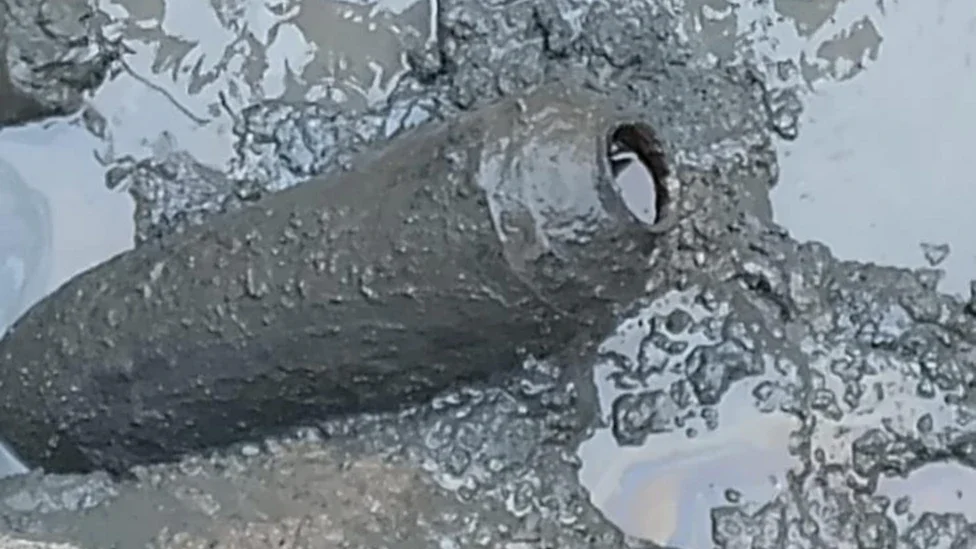
Within the last 14 days, the public record is dominated by a small cluster of high‑impact UK WWII‑era UXO discoveries, particularly in Devon, plus one offshore UXO case affecting an export cable corridor.

Executive summary

  • Two unlinked suspected WWII bombs in Plymouth (Millbay) and Exmouth triggered major evacuations and wide cordons across Devon.[independent.co]​

  • The Exmouth marina find forced a 400 m cordon affecting around 2,000 properties and an estimated 5,000 residents.[news.eastdevon.gov]​

  • The Plymouth Millbay device, identified as a Luftwaffe SC50, halted works and required repeated evacuations while disposal plans were developed.[bbc.co]​

  • In Swindon, a residential evacuation and 100 m cordon were implemented for a suspected UXO that ultimately proved to be a replica, illustrating the operational impact of false positives.[bbc.co]​

  • Offshore, a potential UXO on an export cable route has led to a 500 m exclusion zone, underlining the intersection of UXO risk with UK offshore energy programmes.[kis-orca]​

Incident & discovery roundup (last 14 days)

Location: Exmouth Marina, Devon, UK (14–15 January 2026).
What was found: Suspected WWII unexploded ordnance dredged up from the marina basin during marine works.
Operational impact: Cordon extended from 100 m to 400 m, covering about 2,000 properties and an estimated 5,000 people; residents evacuated overnight, roads closed, assistance centre established at Exmouth Leisure Centre.[
Observation: Coastal regeneration and dredging in historic ports must assume explosive risk as a primary driver for emergency planning, community engagement and resilience of local businesses.

Location: Millbay, Plymouth, Devon, UK (14–15 January 2026).
What was found: Confirmed WWII Luftwaffe SC50 general-purpose bomb discovered on a construction site in Martin Street, Millbay.
Operational impact: 100 m cordon; evacuation of homes and a hotel; disruption to a nearby school and local traffic; overnight pause in operations while Royal Navy bomb disposal arranged equipment for follow‑on action.
Observation: Urban infill and waterfront redevelopment in historically bombed cities require pre‑planned UXO risk governance and realistic allowances for multi‑day EOD operations.


Location: Exmouth (wider Devon context – linked public messaging), UK (14–15 January 2026).
What was found: The same suspected WWII device at Exmouth Marina, but with emphasis on the scale of the affected community rather than the technical item.
Operational impact: Multi‑agency response with door‑to‑door evacuations, temporary accommodation, business disruption along the waterfront and sustained media attention.
Observation: The social licence dimension of UXO incidents (communication, welfare support, reputational impact) is as important as the physical disposals for local authorities and project sponsors.


Location: Swindon, Gorse Hill area, Malvern Road, UK (9 January 2026).
What was found: Suspected unexploded device at a residential property, later confirmed to be a replica.
Operational impact: 100 m cordon; residents instructed to leave homes; emergency services and specialist teams deployed before the all‑clear.
Observation: Even non‑threat items can trigger significant disruption where information is incomplete, highlighting the need for proportionate initial response and good public education on reporting suspicious objects.


Location: Offshore export cable corridor (North Sea, UK waters – UXO position notified 12 January 2026).
What was found: A UXO item located on the seabed along an export cable route, with precise coordinates circulated to mariners.
Operational impact: 500 m exclusion zone established around the UXO position; constraints on nearby vessel movements during investigation and subsequent works.
Observation: Offshore wind and cable projects must treat UXO as a calculable constraint on marine access and vessel scheduling, not a rare anomaly.

Sector lens – urban redevelopment / rail

  • The Plymouth Millbay incident exemplifies UXO risk at the interface of urban regeneration, waterfront construction and transport corridors, occurring near dense residential and mixed‑use areas.

  • Rail-adjacent and city‑centre projects in WWII‑affected locations face similar disruption profiles when a single device demands cordons of 100 m or more and repeated evacuations across multiple days.

Sector takeaways

  • Pre‑construction (Preliminary and Detailed) UXO risk assessments must be integrated into core feasibility and planning for urban regeneration, especially where rail, schools, hotels and care facilities are located within the potential blast radius.

  • Business continuity and stakeholder plans should assume that even a correctly managed incident can generate 24–48 hours of disruption across transport, education and hospitality assets.

Risk implications for UK major projects

  • Recent Devon incidents confirm that mass evacuation and wide cordons are not hypothetical edge cases but live operational realities for UK coastal and city‑centre schemes.

  • Programme risk models for major projects (urban rail extensions, station upgrades, waterfront mixed‑use schemes) should explicitly include UXO scenarios with loss of access to workfaces, community facilities and critical roads for at least one to two days.

For offshore/nearshore projects:

  • The notified offshore UXO position and associated 500 m exclusion zone illustrate how a single find can cut into vessel productivity, access to cable routes and trenching timelines.

  • Contract strategies should make clear how UXO discovery time and standby costs are allocated, and how risk-sharing mechanisms operate when EOD windows clash with weather and marine environmental constraints.

Advisory note – “Critical Friend Corner”

  • Tighten your time horizons: if your UK project breaks ground or mobilises vessels this winter, treat these January 2026 cases as the baseline scenario for consequence, not an outlier.

  • Stress-test your plans: ask whether your evacuation, welfare and communications plans would cope with a 400 m cordon covering thousands of residents and multiple nights away from home.

  • Challenge optimism bias offshore: ensure your marine programmes can absorb a 500 m exclusion zone and associated delays without cascading critical-path failure.

  • Insist on integrated UXO governance: bring UXO specialists into early design, stakeholder planning and contract drafting, rather than dropping them into a live incident.


Image Courtesy of S.I UXO

Read More
Liam Tobin Liam Tobin

⚖️ ALARP: The Legal and Ethical Heart of UXO Risk Management

n the world of UXO clearance, there’s one principle that guides every decision—from desktop studies to disposal: ALARP.

It stands for: 🔸 As Low As Reasonably Practicable

But what does that mean in the real world of piling rigs, tight margins, and layered legacy risks?

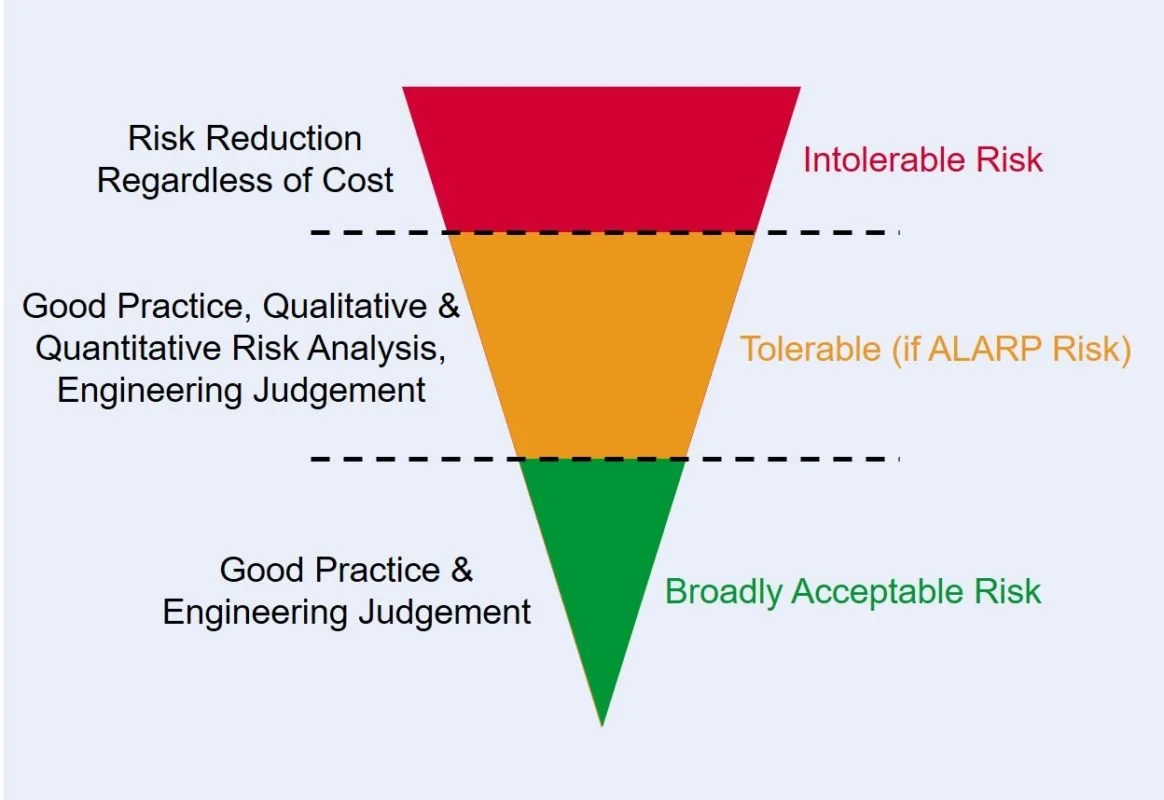
🎯 ALARP = A Balance Between Risk and Effort

The principle asks:

“Have you reduced the risk enough so that further reduction would be grossly disproportionate to the cost, time, or effort involved?”

In UXO terms, that means:

  • Conducting proper risk assessments,

  • Justifying when intrusive investigation is needed,

  • And ensuring mitigation (like clearance or avoidance) is appropriate to both the risk and the project.

⚖️ A Legal Expectation

Under UK law (e.g., Health and Safety at Work etc. Act 1974), duty holders must ensure risks are reduced ALARP. It’s not optional—it’s the standard expected by regulators like the HSE and ONR.

📌 Not One-Size-Fits-All

What’s ALARP for an offshore wind project may differ from a residential build. That’s why independent assurance matters—to confirm the client and contractor aren’t over- or under-reacting to the risk.

At Capreae, we help:

  • Validate ALARP decisions, ensuring they align with CIRIA and project realities,

  • Support clients in documenting defensible decisions,

  • And provide independent assurance that helps satisfy regulators, insurers, and boards.

💬 Up next in the series: The Role of Assurance—and why the “three lines of defence” model is changing how the UK manages UXO risk at scale.

Read More
Liam Tobin Liam Tobin

📚 CIRIA: The Backbone of Best Practice in UK UXO Risk Management

When it comes to Unexploded Ordnance (UXO) clearance in the UK, one acronym consistently defines the gold standard: CIRIA.

🔍 CIRIA (Construction Industry Research and Information Association) is the independent body behind the two core guidance documents that shape how UXO risk is assessed and managed:

✅ C681 – Unexploded Ordnance (UXO): A Guide for the Construction Industry

Published in 2009, this document remains the foundational text. It sets out:

  • The risk-based decision-making process,

  • The importance of Desk-Based Risk Assessments,

  • Staged risk mitigation strategies,

  • And the use of qualified UXO specialists.

✅ C785 – Guidance on Risk Management of Munitions in the Marine Environment

Developed in 2015, C785 focuses on offshore and nearshore operations. It addresses:

  • Marine geophysical survey best practices,

  • Diver and ROV intervention,

  • And integration with broader marine construction risk frameworks.

🛡️ Why CIRIA Matters: These documents are not just “nice to have.” They underpin:

  • Planning approvals,

  • ALARP justifications,

  • Insurance and liability protection,

  • And regulator confidence (including HSE and ONR).

At Capreae, we don't just follow CIRIA—we build assurance frameworks around it. Our role often includes:

  • Reviewing contractor RAMS against CIRIA expectations,

  • Ensuring desk studies and intrusive works are proportionate and defensible,

  • And providing independent assurance that best practice is not only cited—but delivered.

🧭 Coming up next: What ALARP really means in UXO clearance—and why it’s more than just a buzzword.


Read More
Liam Tobin Liam Tobin

🧭 The UXO Clearance Lifecycle in the UK: What Every Principal Contractor Should Know

Before a piling rig breaks ground or a cable is laid offshore, there’s a critical question every project must answer: Is there a risk of unexploded ordnance (UXO) on site?

In the UK, managing this risk is not guesswork. It follows a defined, defensible, and auditable lifecycle. Here’s how:

🔹 1. Desk-Based Risk Assessment (DRA) This is the starting point. Using historical archives—military records, Luftwaffe bomb plots, land use data—we assess whether your site was likely to have been exposed to UXO contamination.

➡️ If the risk is low, you may proceed with standard precautions. If elevated, more steps are needed.

🔹 2. Non-Intrusive Survey We deploy geophysical sensors (e.g., magnetometers) to scan the site surface or shallow subsurface. This is especially useful in open fields or undeveloped ground.

🔹 3. Intrusive Investigation For deeper risk areas—like pile foundations—we use drilling and magnetometry to investigate specific points. This identifies UXO items at depth with high accuracy.

🔹 4. Targeted Clearance Suspect items are safely removed by trained EOD personnel under strict safety protocols. At this point, you're mitigating risk as low as reasonably practicable (ALARP).

🔹 5. Verification and Reporting All works are documented. This is vital for client assurance, regulator confidence, and legal due diligence.

Each stage must be justified by risk and tailored to the project’s needs. One-size-fits-all doesn't work with UXO—and cutting corners can prove costly.

At Capreae, we provide independent oversight at each phase to ensure the lifecycle is defensible, auditable, and ALARP-aligned.

📢 Next up in the series: How CIRIA shapes best practice—and why it matters more than ever in today’s regulatory environment.

Read More
Liam Tobin Liam Tobin

🔍 What Is UXO Clearance—and Why It Matters to Every Construction Project in the UK

Across the UK, from coastal energy developments to city-centre infrastructure builds, there’s an often invisible threat just below the surface: Unexploded Ordnance (UXO).

A legacy of WWII bombing raids, military training, and munitions handling, UXO still poses a real and present risk to site safety, budgets, and schedules.

💣 In fact, it's estimated that over 100,000 UXO items are encountered in the UK every year. Most are safely dealt with—but not without planning, expertise, and robust risk management.

At its core, UXO clearance is about safeguarding life and infrastructure by:

  • Understanding historical military activity;

  • Applying risk-based frameworks (like ALARP);

  • And executing precise technical surveys and mitigation strategies.

With clients, developers, and regulators rightly demanding ALARP-level assurance, the UXO sector continues to evolve. From CIRIA guidelines to independent assurance models (like those we apply at Capreae), best practice is being driven by transparency, technology, and trust.

➡️ In this series, I’ll break down:

  • How UK UXO operations are structured,

  • What "best practice" looks like today,

  • The critical differences between maritime and land-based clearance,

  • And why independent assurance is becoming the gold standard.

📌 Get in touch to understand how we reduce explosive risk—and deliver confidence from the ground up.

Read More
Liam Tobin Liam Tobin

Assured Lethality: A Risk & Assurance Perspective on the British Army Challenge Set 2025

The British Army Challenge Set 2025 articulates a clear ambition: deliver a more lethal, survivable and sustainable land force by 2027.

Achieving this requires more than new technology. It demands assured decision-making, integrated systems, and disciplined ways of operating in a battlespace that is increasingly transparent, connected and lethal.

Capreae Consulting Ltd brings two decades of EOD, UXO assurance and operational risk experience to this problem space. This article highlights where risk-led thinking can strengthen the Army’s four priority challenge areas.

The Changing Battlespace

Modern conflict is shaped by four realities:

  • Persistent surveillance: Drones and sensors make concealment difficult.

  • Precision strike: The distance between detection and destruction has collapsed.

  • Digital dependency: Command systems, logistics and sensors rely on vulnerable networks and the electromagnetic spectrum.

  • Complex terrain and legacy hazards: Mines, UXO and urban clutter constrain movement and decision-making.

These realities create a simple requirement: forces must sense first, decide first and act first — without exposing themselves unnecessarily.

Capreae’s Approach

Capreae applies a practical, risk-informed approach built around three principles:

1. Threat-led.

Start with the threat system and its behaviour, not the desired technology.

2. Human, Process, System.

Ensure people, procedures and equipment align to deliver assured performance.

3. Iterative assurance.

Test, challenge and refine — using spiral development, trials, and independent oversight.

This approach turns capability ambition into grounded, usable practice.

Read More